
Star Hunter-Infinite Lagrange
Exptional GlobalStrategy
3.72.95K Reviews
- Version
- 1.2.1263729
- Installs
- 1.00M
- Age Rating
- Teen
Screenshots
Our Review of Star Hunter-Infinite Lagrange
 Analysis by Appyee
Star Hunter-Infinite Lagrange is the kind of strategy game that asks for patience before it gives you a clear sense of its personality. I found its strongest appeal in the combination of large-scale space imagery, fleet management, and a deliberately measured pace. It is not a quick arcade game dressed in science-fiction artwork. It wants me to watch a situation develop, decide which ships deserve attention, and accept that progress often comes from preparation rather than instant action.
That approach will appeal to players who enjoy planning around a changing map, but it can feel slow if you want constant battles or short sessions with immediate rewards. After spending time with it, I see a game built around the mood of a long expedition: the fleet is the main character, the star system is the stage, and every decision feels more meaningful when I resist the urge to rush.
My first hours with the fleet
The first impression is shaped by scale. The game presents space as something broad and distant instead of a small battlefield packed with icons. Ships, stations, and celestial backgrounds help create the feeling that I am operating inside a larger region rather than simply clearing one mission after another. That visual ambition gives the strategy layer more weight, because sending a fleet away feels like committing resources to a journey.
Exptional Global has made a strategy game that is easy to recognize visually. The science-fiction presentation does not rely only on bright effects or dramatic explosions. The emptiness between objects matters too. I often felt that the quiet space around a fleet was part of the experience, reinforcing the idea that movement and positioning are as important as combat.
The early game is best approached as a learning period rather than a race. New players may be tempted to spend everything as soon as an option becomes available, but I had better results when I paused to understand what each action was preparing me for. A fleet that looks impressive is not automatically a flexible fleet, and a strong-looking attack can still leave the rest of the operation exposed.
One useful habit is to treat every new ship or upgrade as part of a future plan instead of an isolated reward. I found it more helpful to ask what role the addition gives the fleet: more reach, more protection, more pressure, or better support. This makes the interface easier to read and prevents the common strategy-game mistake of collecting improvements without a clear purpose.
The game is free to start, which makes trying its slower style straightforward. It is rated Teen, and that rating fits the serious space-conflict presentation without making the experience feel like a graphic action game. Optional purchases range from $0.99 to $99.99 per item, so I would advise setting a personal spending limit before becoming invested in long-term progression. The game is more enjoyable when purchases remain a choice rather than a response to impatience.
Who will settle into its pace
I would recommend Star Hunter-Infinite Lagrange to someone who enjoys checking a strategy game several times during the day, making a decision, and returning later to see how the situation changed. It works especially well for players who like fleet composition, map awareness, and the satisfaction of gradual improvement.
I would be more cautious recommending it to someone who wants a complete battle every few minutes. The game’s rhythm is not built around constant manual excitement. It asks me to think ahead, and that means some stretches feel more like monitoring than direct control. Players who prefer compact matches, immediate tactical commands, or a clearly defined finish line may be happier with a traditional skirmish strategy game.
A realistic everyday use case is a short morning check before work or school. I can review the fleet’s position, consider the next destination, adjust priorities, and leave the game without needing to complete a full dramatic sequence. Later, I can return with more information and make the next decision. That makes it suitable for a fragmented schedule, although it may frustrate anyone who wants every session to end with a satisfying conclusion.
A world communicated through distance and design
The setting works because it communicates scale without needing to explain every detail through constant dialogue. The visual language of the ships suggests purpose: vessels look like tools built for different jobs, not identical pieces moved across a board. That distinction helped me think about the fleet as an organized operation rather than a single health bar with a space theme.
The backgrounds also contribute more than decoration. Deep space creates a calm surface over a potentially complicated strategic situation. I might be deciding whether to reposition, reinforce, or wait, while the screen itself remains restrained. That contrast gives the game a distinctive mood: the danger is present, but it is rarely presented as noisy chaos.
There is a valuable trade-off here. The broad presentation makes the universe feel larger, but it can also make important information feel less immediate. Players who are used to compact strategy interfaces may need time to connect the visual scene with the practical decision in front of them. I found that zooming in mentally, so to speak, and focusing on one fleet objective at a time reduced that feeling of being lost in the scale.
My most useful approach was to separate atmosphere from information. The scenery tells me where I am emotionally, while the fleet details tell me what I should do. When I tried to read the entire screen as one message, the game felt busier than it really was. When I identified the current objective first, the artwork became an advantage because it made the operation easier to remember.
The star-hunting premise gives exploration a clear identity, but the experience is not simply about looking at attractive planets. The setting is tied to movement, risk, and resource decisions. A distant destination is interesting because it changes the fleet’s situation, not merely because it provides another backdrop. That connection between place and planning is one of the game’s better achievements.
Why the visual mood matters mechanically
In many strategy games, presentation is placed on top of mechanics without affecting how the player thinks. Here, the spacious art direction encourages a longer view. I was less likely to treat every encounter as an isolated puzzle and more likely to consider what it meant for the fleet’s next stage.
That does not make every decision deep by itself. A beautiful background cannot rescue an unclear objective or an inconvenient interface. Still, the consistent setting helped me remain engaged during slower periods. The game feels more coherent when I remember that the fleet is traveling through an enormous environment rather than simply waiting for another menu to unlock.
Players comparing it with conventional mobile strategy games should understand this difference. Many alternatives emphasize rapid collection, short combat loops, or a crowded base screen. Star Hunter-Infinite Lagrange leans toward the fantasy of commanding a fleet in open space. If that fantasy is what you want, the slower presentation supports it. If you mainly want fast optimization, another strategy game may communicate its goals more efficiently.
Sound, silence, and the rhythm of decisions
The audio presentation supports the same restrained mood as the visuals. Instead of making every action feel like a victory announcement, the game leaves room for the sense of travel and anticipation. I appreciated that because the strategic decisions are often about what may happen next. A constantly aggressive soundtrack would have worked against that feeling.
Sound is most effective here when it reinforces transitions: entering a new situation, confirming a choice, or moving from observation into action. These moments help give structure to sessions that might otherwise feel like a series of menus. The result is not a game that demands attention through noise. It creates a quieter form of involvement, where I notice the change because the surrounding presentation has been controlled.
That rhythm has an important consequence for mobile play. I can use the game in short visits without feeling that I have missed an entire match, but I also need to accept that a short visit may end at a planning point rather than a dramatic payoff. This is a good fit for players who enjoy leaving a strategy problem unfinished and returning with a fresh view. It is a poor fit for anyone who needs a strong reward at the end of every session.
I found that the best sessions were not necessarily the longest ones. A focused check of fleet status, destination, and priorities often felt more productive than staring at the game while waiting for something to change. The useful skill is knowing when I have made the meaningful decision and can safely step away.
The pacing also affects how I judge mistakes. In a fast strategy game, a bad choice can disappear under the next burst of action. Here, a poor decision may remain visible for longer because the operation unfolds gradually. That can be frustrating, but it also makes planning feel more consequential. I learned to avoid changing several things at once, since a single adjustment is easier to evaluate than a whole chain of unexplained outcomes.
Keeping the mood from becoming passive
The danger of a slow space strategy game is passivity. If I only wait for timers or notifications, the setting becomes wallpaper. To keep the experience active, I used each return to answer one concrete question: Is the fleet ready to continue, does its composition still match the task, or is the current route creating unnecessary risk?
This small routine made the game feel more purposeful. It also revealed a limitation: players who want constant hands-on control may find the rhythm too indirect. The atmosphere is strongest when I enjoy anticipation, but that same anticipation can feel like a lack of action when I am in the mood for immediate tactical play.
Where the mechanics fit the presentation
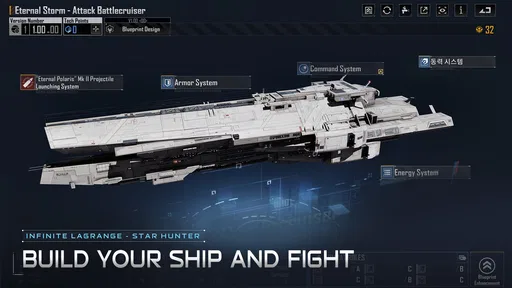
At its core, this is a strategy game about making a fleet function as a group. The important decisions are not limited to choosing the most impressive ship. I had to think about how the fleet’s parts support one another and whether a choice made for one encounter would create problems later. That gives the game more texture than a simple upgrade ladder.
One of the clearest practical lessons is to avoid building around a single favorite unit. A fleet that looks powerful in one situation can become awkward when the objective changes. I got more value from maintaining a balanced plan and leaving room to adapt. That flexibility matters because the game’s large-scale presentation encourages long-term commitments, and a rigid commitment can be expensive in time and resources.
Another useful workflow is to review the fleet before reviewing the destination. I first asked what my current group could realistically handle, then considered where it should go. Reversing those steps encouraged me to chase attractive opportunities without checking whether the fleet was prepared. This is a small change, but it makes the strategic layer feel less reactive.
Resource discipline is equally important. Free-to-play strategy games often invite players to spend immediately, especially when a new improvement is visible. I found it wiser to reserve flexibility for moments when the fleet genuinely needed it. The value of an upgrade depends on timing, and an improvement used too early may feel less helpful than a modest option saved for the right operation.
The game’s monetization makes this discipline more relevant. With individual purchases reaching $99.99, players who dislike spending pressure should approach the store carefully and decide in advance whether they want to remain entirely free-to-play. I did not see the purchase system as a reason to dismiss the game, but it is a reason to play with boundaries. The slower pacing can make an immediate purchase feel tempting when patience would have been enough.
Its minimum operating requirement is Android 5.0, and the current version is 1.2.1263729. Those details make it accessible to a broad range of Android devices, although the actual comfort of play will still depend on the handset and how well the interface fits its screen. I would give the game a little time before judging it from the opening minutes, because understanding the fleet loop matters more than the first visual reveal.
What separates it from familiar alternatives
Compared with quick mobile strategy titles, Star Hunter-Infinite Lagrange feels less like a sequence of compact battles and more like an ongoing command problem. Compared with traditional real-time strategy games, it is less about constant direct control and more about preparation, fleet identity, and waiting for decisions to unfold.
That middle ground is both its appeal and its limitation. It can provide a stronger sense of an operating fleet than a simple match-based game, but it may not satisfy someone seeking the precision of issuing commands every second. I would choose it over a faster alternative when I want a persistent science-fiction mood. I would choose the faster alternative when I have only a few minutes and want a complete tactical challenge.
The game also differs from city-building strategy titles that make the base the center of attention. Here, the fleet and the space around it carry more of the emotional weight. That makes exploration and movement feel important, but it can leave players wanting a more immediate sense of control over a single location. The right choice depends on whether “commanding a fleet” sounds more appealing than “developing a base.”
For advanced players, the main opportunity is to create personal operating rules. I found value in deciding which objectives deserved a full commitment, which could wait, and when a fleet should be reorganized instead of pushed forward. These rules turn the slower rhythm into a deliberate strategy rather than a passive wait. They also make experimentation safer because I can compare one change at a time.
For newer players, I would recommend resisting the urge to copy a single apparent best choice. The game is more understandable when I observe what the fleet is being asked to do and adjust around that task. A flexible, readable plan is more useful than a complicated one I cannot explain.
Who should play it, and who should move on
With more than 1M installs, the game has clearly found an audience for its particular blend of space presentation and strategy. Its average rating is 3.7 from around 68K ratings, alongside roughly 3K written reviews. I read that overall response as a sign of a game with a recognizable appeal but also a pace and structure that will not suit everyone.
I would suggest it to science-fiction fans who enjoy the idea of watching a fleet develop over time. It is also a good match for players who prefer planning before action, checking progress in several small sessions, and making decisions that have consequences beyond a single encounter. The atmosphere is not an extra layer; it is part of why the slower mechanics can work.
I would skip it if my priority were instant combat, short competitive rounds, or constant manual input. I would also be careful if I tend to make impulsive purchases in progression games. The free entry is useful for testing the style, but the optional spending range means I should decide my limits before the game becomes a daily habit.
The Teen content rating makes it more appropriate for older players than for young children, especially because the subject is built around conflict and military-style fleet command. It is not a substitute for a simple family strategy game. Its tone is more serious, and its systems ask for more patience than a casual puzzle.
My verdict on the atmosphere and the command loop
Star Hunter-Infinite Lagrange succeeds when its art direction, sound, and pacing work together. The wide space environments make the fleet feel significant, the restrained audio leaves room for anticipation, and the slower rhythm gives planning time to matter. I came away with the feeling that I was managing an expedition rather than merely tapping through a chain of rewards.
Its weaknesses come from the same choices. The scale can make information feel less immediate, the waiting can become passive, and players who want fast tactical control may find the experience too indirect. The in-app purchase range also deserves a thoughtful approach, particularly for anyone who is sensitive to progression pressure.
My recommendation is therefore specific: try it if you want a persistent space strategy game with a calm, deliberate mood and a fleet-centered identity. Give it several sessions to see whether its pacing becomes relaxing or frustrating. If the idea of checking a fleet, making one careful adjustment, and returning later sounds satisfying, this game has a strong chance of fitting your routine. If you need action to happen immediately, its atmosphere may feel beautiful but too distant.
For me, the best part is the coherence between presentation and play. The game does not merely show a large universe; it asks me to think at the scale of one. Its real strength is the way atmosphere turns patience into part of the strategy. That will not make it universally appealing, but for the right player, it gives the fleet’s journey a mood that faster alternatives rarely manage.
After reviewing the full experience, I would describe Star Hunter-Infinite Lagrange as a thoughtful choice for patient mobile strategists rather than a universal recommendation. It is free to begin, developed by Exptional Global, and available for Android users running version 5.0 or later. If you are ready to plan around distance, composition, and timing, it is worth exploring; if you want a self-contained battle every time you open the app, another strategy game will probably serve you better.
Verdict
Strengths of Star Hunter-Infinite Lagrange
- Deep fleet customization and strategic combat options
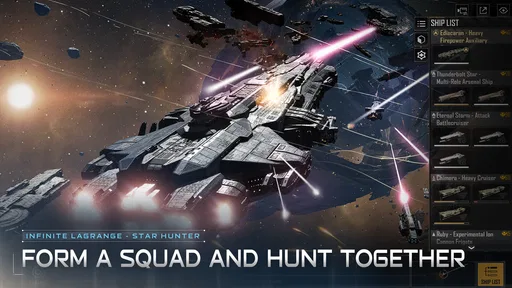
- Large-scale battles create an impressive sense of scope
- Beautiful space visuals with detailed ships and environments
- Regular events provide new objectives and progression opportunities
- Resource management adds meaningful long-term planning
Limitations of Star Hunter-Infinite Lagrange
- Steep learning curve can overwhelm players unfamiliar with strategy games
- Progress may feel slow without frequent play or careful resource use
- Requires substantial storage space and a stable internet connection
- Long construction and research timers interrupt faster-paced sessions
- Some advanced progression features may encourage in-app purchases
Other Releases by Exptional Global
View All


Similar Picks in This Category
View All
Clash of Clans
Supercell4.5

Plants vs. Zombies™
ELECTRONIC ARTS3.7

Lords Mobile: Kingdom Wars
IGG.COM4.5

Clash Royale
Supercell4.4

State.io — Conquer the World
CASUAL AZUR GAMES4.1

Car Driving School : Car Games
Spark Game Studios3.9
Frequently Asked Questions
What is Star Hunter-Infinite Lagrange?
Star Hunter-Infinite Lagrange is a space-themed strategy and exploration game in which you build fleets, expand your influence, gather resources, and compete across a large science-fiction universe. Gameplay focuses on planning rather than quick reactions, with players managing ships, researching improvements, completing missions, and making tactical decisions during encounters. It is best suited to users who enjoy long-term progression and detailed space management.
Can I play Star Hunter-Infinite Lagrange offline?
The game is primarily designed as an online experience, so a stable internet connection is generally required for account access, synchronization, events, multiplayer features, and server-based progression. Offline play should not be expected, and some functions may stop working if your connection is interrupted. Before downloading, make sure you have reliable Wi-Fi or mobile data, especially if you plan to play for extended sessions.
Is Star Hunter-Infinite Lagrange free to download and play?
Star Hunter-Infinite Lagrange can generally be downloaded without an upfront purchase, but it may include optional in-app purchases. These can provide resources, speed up progression, unlock convenience features, or offer limited-time items. You can usually play without spending money, although progression may require more patience. Parents should also review device purchase controls if children will be using the application.
Does the game require a powerful phone or tablet?
Because Star Hunter-Infinite Lagrange includes large maps, animated fleets, menus, online activity, and detailed science-fiction visuals, performance can vary between devices. Newer Android phones, iPhones, and tablets should provide a smoother experience, while older or entry-level hardware may experience longer loading times, reduced graphics quality, heating, or battery drain. Keeping sufficient storage free and closing background apps can improve stability.
What should new players know before starting?
New players should be prepared for a gradual learning curve. The game combines resource management, fleet development, missions, research, and strategic decisions, so progress is not always immediate. It is worth completing the early tutorials, reading ship and technology descriptions, and avoiding unnecessary upgrades until you understand your priorities. Joining an active community or alliance can also make exploration and competitive content easier to manage.
Play our best games!


